
Jiesia factory, Kaunas
How we make bone china
From casting the porcelain body in a mould to glazing, firing and decorating, every stage takes place at our factory.
01
Our preserved recipe
Fine bone china is made from several ingredients. Animal-derived bone ash sets it apart from other types of porcelain. At Jiesia, we preserve the recipe used over decades of production.
02
Original moulds
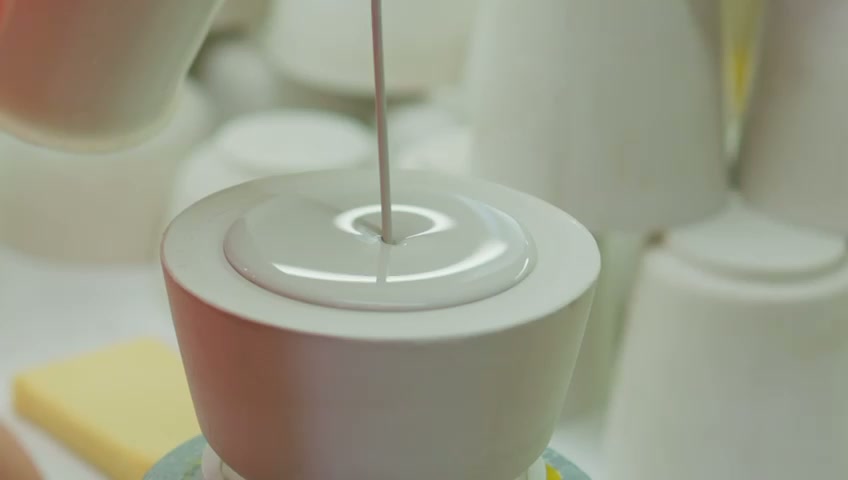
We use models and original plaster moulds preserved in the Jiesia archive. Liquid porcelain body is poured into a mould; once it has set, the piece is removed and carefully finished.
03
Skilled hands
More than 90 per cent of our pieces are made and decorated by hand. Details are shaped, surfaces refined and handles attached — each stage calls for a skilled hand.
04
Decoration
We make pieces in series and in small batches, and personalise them with names, dates, monograms, messages or company logos.
Casting and moulds
Liquid porcelain slip is poured into plaster moulds. The factory keeps hundreds of older moulds that can be brought back into use. Plates are shaped on a machine that presses the clay into form.
Firing and glaze
The first-fired piece, the biscuit, is fired at about 1150 °C, set in supports so it keeps its shape. It is then glazed: the glaze is violet before firing and turns white in the kiln.
Decoration
Decorators draw the sketches and paint the pieces. On-glaze colours are made from metal oxides, each giving a different shade. Because decoration is applied by hand, no two pieces are exactly alike.
“More than 90% of our pieces are made and decorated by hand.”
Questions
How is porcelain made?
Liquid slip is cast in a plaster mould; the piece is finished, fired, glazed, fired again and decorated.
At what temperature is the biscuit fired?
At about 1150 °C.
Made in Kaunas
See the finished pieces
Coffee and tea services, cup sets, dinnerware, vases and decorative pieces — different forms made with the same Jiesia production tradition.